A little about search data.
“N-95 mask?”
I had no idea what that was.
I looked up from my screen at Chris, the short-fused workaholic and founder of Batty Fang. We were all back in our OTR office around mid-January, long before lockdown orders to contain COVID-19 began in the midwest.
While most of us were churning out deliverables for the new quarter—living mostly normal lives—Chris’ time at the office was spent obsessively watching search ranking numbers on Amazon as millions of Americans began to type “n95 mask” into their search bars.
“That’s neat—we can do a quick article about that.”
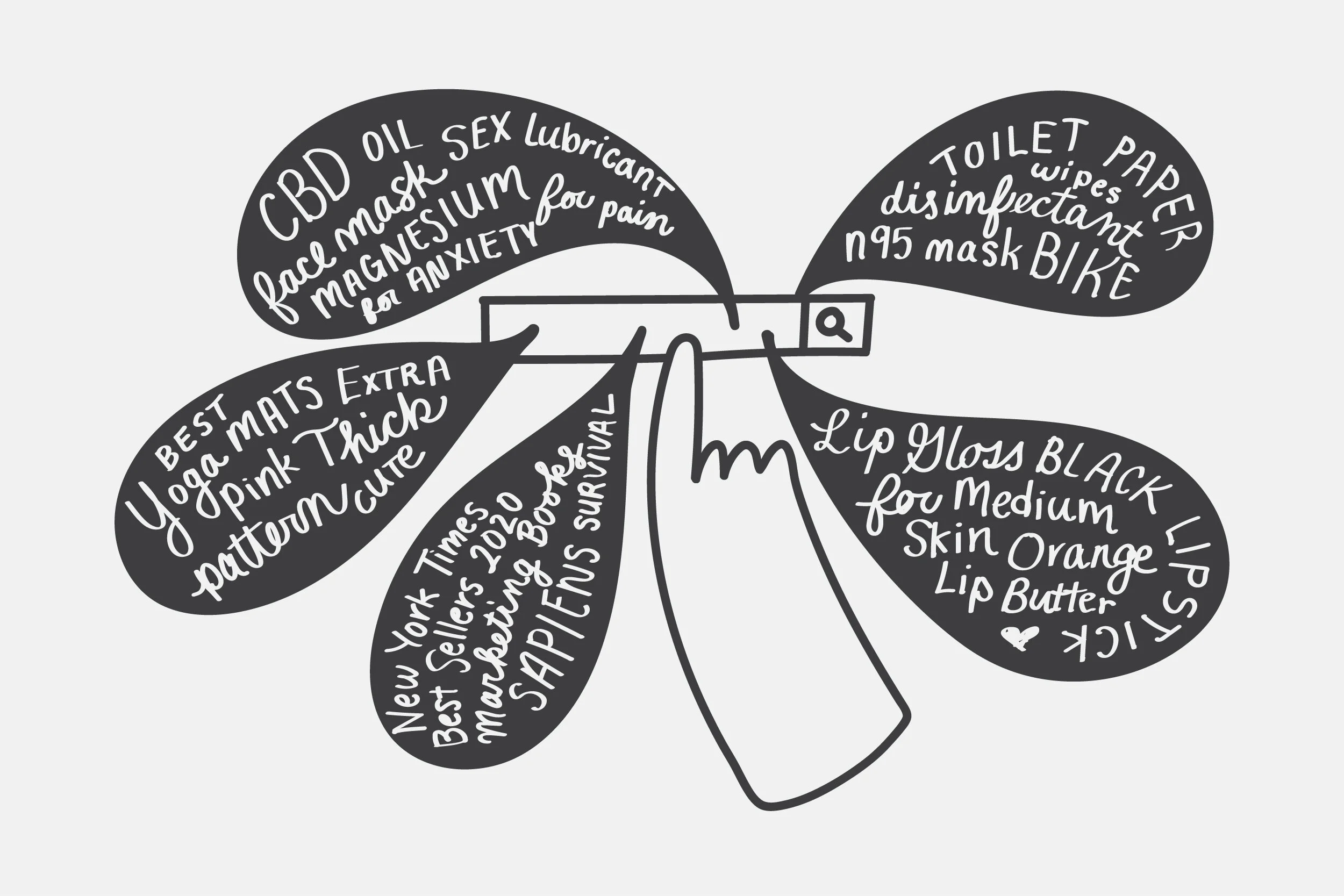
In retrospect, that bit of information should have raised red flags, but unfortunately, no one could predict the logistic shockwaves to come and aftermath of COVID-19 within American borders.
We normally use this type of search data to help companies meet demand or understand customer expectations. Batty Fang does most of the heavy-lifting in terms of data collection and strategy, while Grrraphite focuses on segmenting the data and generating content from a consumer lens. In the case of the n95 mask, looking at the language across millions of searches can sometimes reveal an urgent demand or uncover surprising trends and insights.
At a basic level, most companies will use search data to understand which “keywords” need to be leveraged in web content or bid on keywords for campaigns. When a potential customer uses those keywords in a search, that brand’s content will hopefully appear in top results or feeds and attract attention. Search data can—and should—be used for much more.
Leveraging search data to gauge demand isn’t groundbreaking or new. There are hundreds, if not thousands of small Amazon sellers who use this data daily to sell truly shameful things on Al Gore’s internet.
For reference, the past decade has seen various research identify positive correlations between the volume of online searches and real-life instances of unemployment or cases of the flu. More recently, the U.S. Army funded a study using search data to identify and address the top concerns of potential recruits—a move that uncovered more consensus-building insight than a focus group or survey.
You should also check out Google’s exploration into search behaviors.
As someone who fell in love with data later in my professional career, I recommend ordering a copy of Everybody Lies, a New York Time’s bestseller written by data scientist and master storyteller Seth Stephens-Davidowitz. His exploration into the topic of Google search data provides provocative insights on race, gender, and our culture at large—much more impactful than our product-focused segmentations could ever provide.
And sadly, search is probably one of the most under-utilized investigative tools that can be used by brand builders and product developers alike. Have questions about what consumers prefer in your category? Look at their search patterns. They’ll tell you exactly the features or benefits that are important to them—and it will be completely unbiased. Keeping an eye out for new trends and opportunities? Look at search data—it will tell you which trends and new product offerings have legs and what types of unmet needs customers are struggling to fill.
In the next five years, we hope to see more brand builders using search data as a way to drive innovation and address real needs, because in order for our economy (and our sanity) to get back to where it needs to be, we’ll have to use company resources wisely and shift the focus of building new brands and products back to meeting the needs of consumers.
Interested in learning how online shopping behaviors can inform your brand? Say hello.